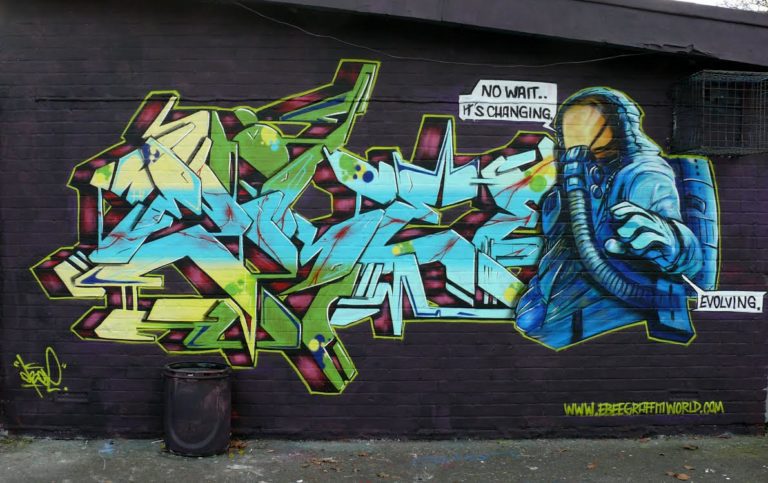

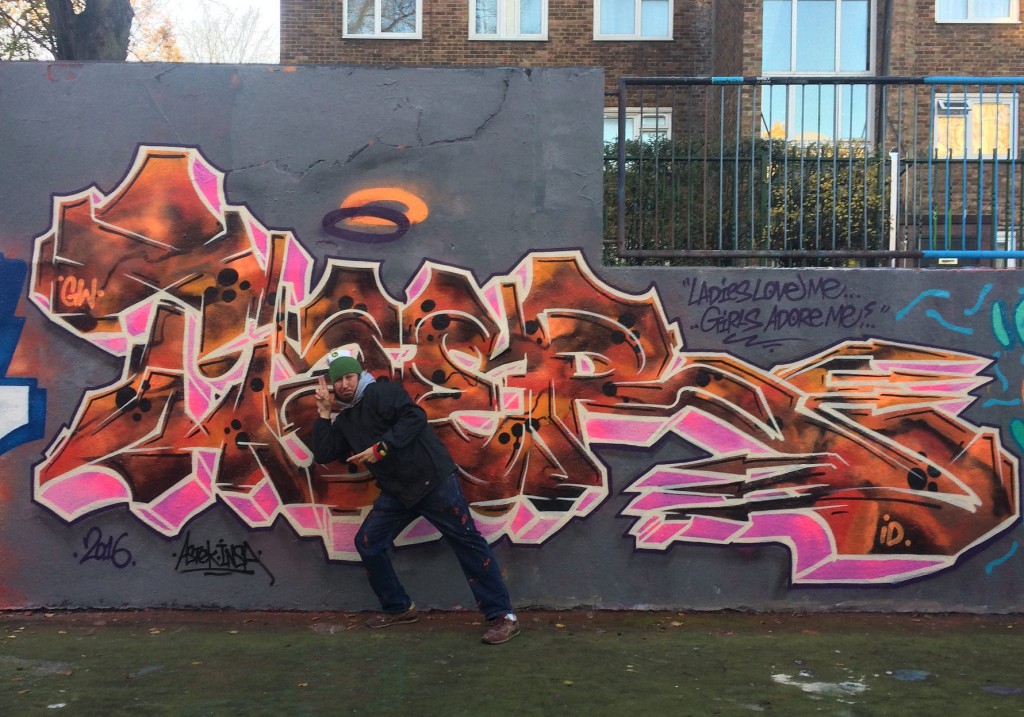
Tizer
I started in 1988, with my brother and 2 friends. We had been looking at Style Writing for a few years before hand and really liked it. In South London there weren’t many tube lines so people were more into bus bombing. Back then you could tell where someone was from by their handstyles. South London was known for elaborate wild style tags. So in the early 80’s it took us time to be able to read them but once we were able to read them we were hooked.
My first tag was Rebel, then Pesos. I didn’t like either names so I asked my friend what I should write and he said “You should write Famine, because you’re so skinny you look like a crackhead or your dying from AIDS” It was true I looked ill….ha ha. I wrote that for a while until I met some older writers at a rave when I was 16 and when I told them they all laughed at me. So the next day, I saw a guy from my neighbourhood that was writing Coke. I thought his name was cool because it was a drink and a reference to drugs. So I went into a shop and looked at the drinks. Fanta was a European drink so i thought that there would be someone with that name. Tizer is a British pop drink, it’s like a red 7UP. It’s not very good but it had a Z in the middle and finished with an R. For many years I mostly wrote Tize or Tise. Until I was arrested twice in a week and added an R . At the time I was a bomber, mostly doing insides, stations, streets and busses.
My brother and I were into Punk, Ska and Reggae as kids, British Punk and Ska was dying by 1984, all of our heroes were making disco rap songs. Radio Clash by the Clash, Wot by Captain Sensible, Buffalo Gals by Malcolm McLaren and Bauhaus were making Electro tunes. So as kids we felt Hip Hop was the new Punk. When we’d go to local hip hop jams, there was always punks and Rastas there in the beginning. We were shit at rapping and couldn’t afford decks. We liked to draw so with writing we could still be a part of it because nobody knew we were white kids or who we were. London had an aggressive scene in the 80’s and 90’s so we didn’t tell people who we were until I was 25. By then I was big enough to handle myself and didn’t care if people knew me. So for the first 9 years I was mostly just into tagging. I’d do trackside dubs (in England a throw -up was a one letter, mostly hollow, your name in 3 colours was called a “Dub”. 4 colours or more was a Masterpiece/a Piece) but was more interested in getting up. I had to do 60 tags a day, if I didn’t I’d have to catch up or do less the day after.
Empecé en 1988, con mi hermano y dos amigos. Llevábamos varios años interesándonos por el Style Writing y nos gustaba mucho. En el sur de Londres no había muchas líneas de metro, por lo que la gente prefería pintar en los autobuses. En aquella época, se podía saber de dónde era alguien por su estilo de escritura. El sur de Londres era conocido por sus elaboradas firmas de estilo salvaje. A principios de los 80 nos costó tiempo aprender a leerlas, pero una vez que lo conseguimos, nos enganchamos.
Mi primera firma fue Rebel, luego Pesos. No me gustaba ninguno de los dos nombres, así que le pregunté a un amigo qué debía escribir y me dijo: «Deberías escribir Famine, porque estás tan delgado que pareces un drogadicto o alguien que se está muriendo de sida». Era cierto, parecía enfermo… ja, ja. Escribí eso durante un tiempo, hasta que conocí a unos writers mayores en una rave cuando tenía 16 años y, cuando les conté eso, todos se rieron de mí. Al día siguiente, vi a un chico de mi barrio que escribía Coke. Me pareció que su nombre era genial, porque era una bebida y una referencia a las drogas. Así que entré en una tienda y miré las bebidas. Fanta era una bebida europea, así que pensé que habría alguien con ese nombre. Tizer es una bebida gaseosa británica, es como un 7UP rojo. No es muy buena, pero tenía una Z en el medio y terminaba en R. Durante muchos años escribí principalmente Tize o Tise. Hasta que me arrestaron dos veces en una semana y añadí una R. En aquella época era writer, pintaba principalmente en interiores, estaciones, calles y autobuses.
De niños, a mi hermano y a mí nos gustaba el punk, el ska y el reggae, pero en 1984 el punk y el ska británicos estaban desapareciendo, y todos nuestros héroes componían canciones de disco rap. Radio Clash de The Clash, Wot de Captain Sensible, Buffalo Gals de Malcolm McLaren y Bauhaus hacían música electro. Así que, de niños, sentíamos que el hip hop era el nuevo punk. Cuando íbamos a las jam sessions locales de hip hop, al principio siempre había punks y rastas. Éramos muy malos rapeando y no podíamos permitirnos comprar platos de dj. Nos gustaba dibujar, así que con la escritura podíamos seguir formando parte de ello porque nadie sabía que éramos chicos blancos ni quiénes éramos. Londres tenía una escena agresiva en los años 80 y 90, así que no le dijimos a la gente quiénes éramos hasta que cumplí 25 años. Para entonces, ya era lo suficientemente mayor como para valerme por mí mismo y no me importaba que la gente me conociera. Así que durante los primeros nueve años me dediqué principalmente al tagging. Hacía pompas junto a las vías (en Inglaterra, un throw-up era una sola letra, normalmente hueca, y tu nombre en tres colores se llamaba «dub». Cuatro colores o más era una obra maestra o una pieza), pero me interesaba más subir. Tenía que hacer 60 tags al día; si no lo hacía, tenía que ponerme al día o hacer menos al día siguiente.


¿Qué te motivó para empezar a pintar?
What motivated you to get started painting?
Cuando empecé a pintar, era un niño enfadado. El skateboarding me ayudaba a descargar mi ira y, al escribir, podía cabrear a la gente. Mis amigos se convirtieron en DJ de batalla. A mi hermano Shucks y a mí nos encantaba esta forma de arte. Era muy futurista y, además, aprendía más sobre arte que en la escuela. La gente me enseñaba trucos para hacer tintas, mezclar pintura en aerosol y diferentes trucos del oficio. En aquella época era todo muy secreto. Solo te presentaban a otros si confiaban en ti. En aquel entonces no le decía a mis novias que lo hacía porque no les habría impresionado y podrían delatarme si rompiéramos. Así que éramos muy reservados sobre todo lo que hacíamos.
Me encantaba. Si oía que alguien había hecho una obra, iba a esa zona y daba vueltas hasta encontrarla. Luego intentaba averiguar cómo la había pintado. Nadie te enseñaba a dibujar o pintar, teníamos que descubrirlo todo por nosotros mismos.
Solo cuando alcanzábamos un nivel determinado y nos conocían, pintábamos con otras personas y les preguntábamos cómo hacer las cosas.
In the beginning of me writing I was an angry child. Skateboarding got my anger out and writing I could piss people off. My friends became battle dj’s. Me and my brother Shucks loved the artform. It was super futuristic also I was learning more about art than at school. People taught me tricks on how to make inks, mix spray paint and different tricks of the trade. It was so secretive back then . You were only introduced to others if you were trusted. Back then I wouldn’t tell my girlfriends that I did it because they wouldn’t have been impressed and they could rat on me if we broke up. So we were super secretive about everything we were up too.
I was in love with it. I’d hear someone had done a piece. I’d go to that area and do circles until I found it. Then try and figure out how it was painted. Nobody would teach you how to draw or paint we had to figure it all out ourselves.
It was only when we were at a standard and were known was when we painted with other people and we’d ask questions on how to do things.


¿Qué es lo que más te gusta del graffiti y lo que menos?
What do you like most about graffiti and what do you like least?
Hay muchas cosas que me encantan de Style Writing. Me encanta la libertad que me ha dado. A lo largo de mi vida, he podido pintar y no pensar en mis problemas mundanos, puedo tener unas horas en las que no pienso en cosas terribles. Para mí, a veces ha sido como una terapia artística.
Al principio no sabía dibujar, pero ahora soy capaz de dibujar o recrear una imagen sin estrés.
Me ha hecho feliz, lo que creo que es probablemente lo más importante de todo. Me ha ayudado a superar los peores y los mejores momentos.
He hecho amigos increíbles en todo el mundo y he estado en lugares y visto cosas que otras personas no han visto.
Puedo observar la calle y ver quién está tramando algo o quién es policía, y salir de situaciones antes de que sucedan. Te conviertes en un tipo de la calle. Sabes cómo hablar con los sintecho y con la élite, y sortear los retos sin sufrir ningún daño.
Me encanta ver cómo la gente toma letras y caracteres y es original. Eso me sorprende. Me encanta todo. Si es original y eres tú mismo, me gusta. Así que no me importa si es arte callejero o escritura de estilo, si es bueno, es bueno, y si es una mierda, es una mierda. Así de simple.
A veces me molesta la actitud de la gente. A veces la gente es horrible, actúa con sarcasmo o hace cosas desagradables para burlarse de los demás. No digo que todo el mundo tenga que llevarse bien, pero todos hacemos lo mismo.
No me gusta lo espeluznantes y peligrosos que son algunos tipos con las mujeres o los jóvenes, eso definitivamente no está bien.
Creo que el mantra humano debería ser «No seas un capullo». Si sientes que estás siendo un capullo, prueba otra forma de actuar.
There are so many things that I love about Style Writing. I love the freedom it has given me. Through out my life I’ve been able to paint and not think about my worldly problems, I can have a few hours where I’m not thinking about terrible things. For me at times it’s been like art therapy for me.
I couldn’t really draw when I started and am now able to draw or recreate an image without stress.
It has made me happy, which I think is probably the most important thing of all. It’s got me through the worst and best times.
I’ve made amazing friends all around the world and I’ve been to places and seen things that other people haven’t.
I can watch the street and see who’s up to some bullshit or who’s a cop, and get myself out of situations before they happen. You become a street dude. You know how to talk to the homeless to the elite and weave your way through challenges unscathed.
I love seeing where people are taking letters and characters and being original. That shit amazes me. I love it all. If it’s original and you’re bring yourself I’m down. So I don’t care if it’s Street Art or Style Writing if it’s good it’s good if it’s shit it’s shit. Simple.
I get annoyed by people’s attitudes at times. Sometimes people suck, acting snide or doing shitty things to get one over on other people. I’m not saying everyone needs to get along, but we all do the same shit.
I don’t like how creepy and dangerous some guys are around women or younger people, that shit is definitely not cool.
I think the human mantra should be “Don’t be a dick” if you feel your being a dick, try a different way.


¿Qué piensas de la idea de publicar tus piezas con una entrevista en elrincondelasboquillas.com?
What do you think about the idea of us publishing your artworks on our web «elrincondelasboquillas.com»?
Estoy emocionado. Gracias por darme una plataforma para expresar lo que pienso.
Hay tanta gente que se dedica a este tipo de arte en todo el mundo ahora mismo que solo puede mejorar. La gente tiene diferentes influencias e ideas de otros lugares. Eso solo puede fortalecer esta subcultura.
De niño, sentía que el skateboarding y el graffiti iban a cambiar el mundo. Se te respetaba por lo que hacías, no por tu aspecto, por cuánto dinero tenías, por tu religión o tu sexo. Se trataba del estilo. Se saltaba todas las estúpidas restricciones de la sociedad normal. Éramos el primer grupo multicultural de niños en Londres y éramos hermanos y hermanas. Para mí era increíble, y todavía lo es.
I’m excited. Thank you for giving me a platform to say what I think.
There are so many people who do this type of art around the world now, it can only make it better. People have different influences and ideas from other places. It can only make this subculture stronger.
As a child, I felt Skateboarding and graffiti was going to change the world. You were given respect for what you did, not what you looked like, how much money you had, what religion or sex you were. It was about style. It bypassed all of the bullshit constraints of normal society. We were the first multicultural group of kids in London and we were brothers and sisters. Shit was amazing to me and still is.


¿Te acuerdas de la primera pieza?
Do you remember the first piece?
Mi primera obra fue una mierda. Fui con mi colega de crew Kame SHK. Había preparado la pintura, así que estaba muy emocionado. De camino allí perdí mi boceto, así que tuve que improvisar algo. Un writer me enseñó a dibujar, pero no sabía cómo hacer la parte inferior de las letras porque estaban cortadas. Así que tuve que dibujar mi obra desde el suelo hacia arriba. Quedó un desastre. No sabía qué hacer para rellenarla, así que dibujé el logotipo de Nike. Quedó horrible.
Divertidísimo.
Creo que nunca estarás satisfecho con lo que produces porque eso es parte de ser artista. Lo desmontarás hasta que lo odies y eso te obligará a hacer más.
Me divierto tanto mientras pinto que, cuando termino, no me gusta porque la diversión ha terminado. Me llevará unos seis meses y pensaré: «Bueno, no está tan mal, pero sigo odiando esa E», ja, ja.
My first piece was dogshit. I went with my crew mate Kame SHK. I’d racked paint, so I was super excited. On the way there I lost my outline so I had to freestyle something. I was shown how to sketch by a train writer so I didn’t know how to do bottoms of letters because they were cut off. So I had to draw my piece from the floor up. It was a blobby mess. I didn’t know what to do in my fill so I did Nike swooshes. It was terrible.
Hilarious
I think you’ll never be happy with what you produce because that’s part of being an artist. You will pull it apart until you hate it and that forces you to do more.
I’m having so much fun while I’m painting that when I’m done I don’t like it because the fun has stopped. It’ll take me about 6 months and I’ll be “well it’s not that bad but I still hate that E” ha ha.


Y para terminar ¿algo que quieras decir?
And finally, anything you want to say?
Me gustaría darte las gracias por invitarme a su genial sitio web. Gracias a los lectores por escuchar lo que tengo que decir.
Quiero enviar un saludo a todos las crews en las que estoy, desde las crews locales hasta las internacionales. Todos sois una gran inspiración para mí, gracias por representar a estos grupos. Soy fiel, no voy a rendirme.
A todos los que han sido mis amigos y me han ayudado en este mundo loco. Los quiero a todos.
A todos los escritores y artistas callejeros más jóvenes. Seguid rockeando, no abandonéis nunca e intentad manteneros humildes, todos podemos aprender unos de otros y hacer de este un lugar mejor para los jóvenes.
Manteneos frescos.
Tío Tizer
Instagram: @tizerid