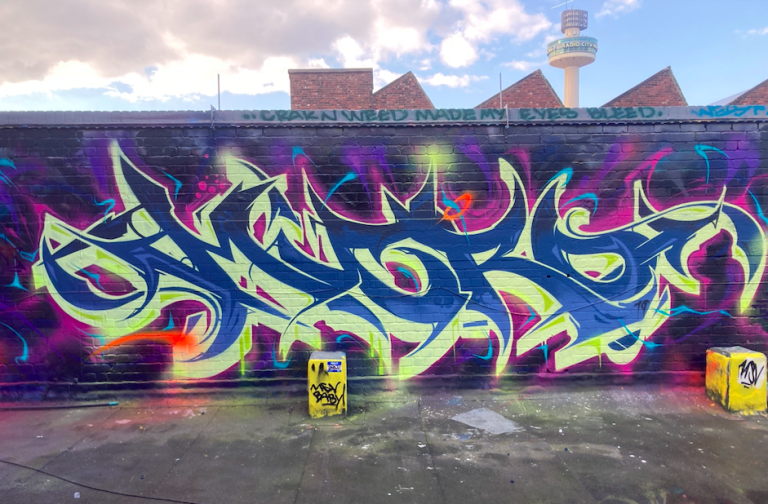

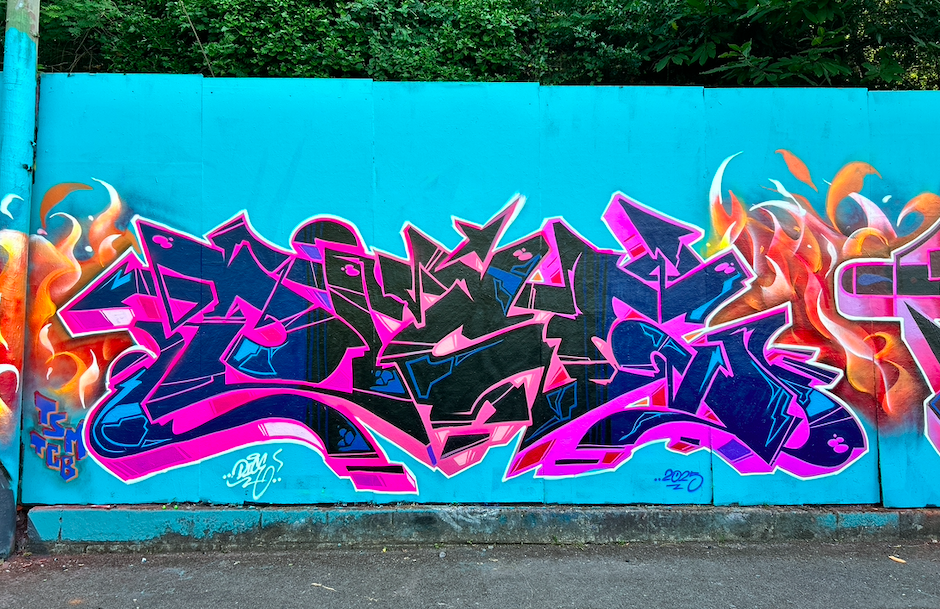
Dice
London (United Kingdom)
¿De dónde viene tu apodo?
Where does your pseudonym come from?
Empecé con otros nombres pero no eran buenos para las piezas, se me ocurrió este nombre en 1986 y después de unas cuantas piezas se me conoció por Dice y me lo quedé.
I started out with other names but they were not good for pieces, I came up with this name in 1986 and after a few pieces I got known for Dice and it just stuck.


¿Qué te motivó para empezar a pintar?
What motivated you to get started painting?
La motivación para pintar graffiti surgió tras la explosión y el nacimiento del hiphop cuando llegó aquí al Reino Unido a principios de los años ochenta.
El tagging fue algo muy importante durante mucho tiempo, sólo markers, rara vez se utilizaba pintura en aerosol, así que hice todo eso del tagging y sentí que era el momento de cambiar. Vi que aparecían piezas a mi alrededor y quise probarlo. Me llevó un tiempo aprender a controlar las latas y las diferentes marcas de pintura de la época, que en su mayoría eran para coches o para pintar una maceta con colores aguados y terribles.
The motivation to paint graffiti came after the explosion and birth of hiphop when it arrived here in the UK in the early 1980’s.
Tagging was a big thing for a long time just pens, rarely using spray paint, so I did the whole tagging thing and felt like it was time for a change. I saw pieces around me appearing and wanted to try it, it took a while to work out can control and all the different paint brands back then which were mostly made for cars or painting a flower pot and watery and terrible colours.


¿Qué es lo que más te gusta del graffiti y lo que menos?
What do you like most about graffiti and what do you like least?
El acto de pintar con spray es terapéutico, relajante y un descanso del estrés de la vida cotidiana. También he conocido a gente estupenda a lo largo de los años. Diría que quizá el lado negativo es que algunos ciudadanos siguen viendo los graffitis como garabatos y chapuzas de niños traviesos.
It is therapeutic, the act of painting using spray paint, its relaxing, and a break from the daily life stresses. I have also met some great people over the years. I would say maybe the negative side is that some members of the public still see graffiti as scribble and mess made by naughty kids.


¿Qué piensas de la idea de publicar tus piezas con una entrevista en elrincondelasboquillas.com?
What do you think about the idea of us publishing your artworks on our web «elrincondelasboquillas.com«?
Es estupendo. Me siento muy honrado de haber sido incluido, gracias.
It is great! I am very humbled to be included, thank you.


¿Te acuerdas de la primera pieza?
Do you remember the first piece?
Alrededor de 1984, había una pieza en la que se leía CRASH. Fue en el lado de un edificio de la fábrica frente al bloque de pisos donde crecí en el sur de Londres.
No sabía todo lo que había que saber sobre el graffiti ni que tenías que hacer una obra que llevara tu nombre. Elegí una palabra al azar que me pareció que sonaba bien. Para el relleno utilicé una mezcla de pequeñas latas grises de pintura para coches que compré en Woolworths. Cerca de mi bloque de pisos había una nave industrial que pintaba decorados para teatros. Me di cuenta de que utilizaban pintura en aerosol y tiraban los restos a un contenedor de basura que había fuera. Un día conseguí salvar unos veinte botes de restos de pintura negra, azul real y roja.
Pinté la pieza solo, pero con algunos colegas vigilando (pensábamos que se suponía que había que hacerlo por la noche, como en las películas). No creo que Style Wars se hubiera emitido todavía en la televisión, así que no tenía ni idea de cómo los pasos de una pieza se unían – toda la estructura. Recuerdo que hice el contorno final en negro, con todas las sombras y todo lo demás, y luego intenté rellenarlo con cuidado, tenía muchos botes de imprimación gris y pintaba directamente sobre una pared de ladrillos; cuando llegué a la última letra, la primera se había hundido tanto en la pared que tuve que volver a pintarla. Fue una experiencia de aprendizaje, por no decir otra cosa, aprender mientras pintaba.
En aquel momento no tenía tag, así que puse las iniciales de mi nombre real al lado. Cuando mi madre pasó un día y lo vio, me dijo que había sido una estupidez y que todo el mundo sabría quién lo había hecho y dónde vivía. Aprendí mucho de aquellas primeras piezas, ¡por las malas! Pero fue una buena experiencia para el futuro. ¡¡Lecciones aprendidas lol, no menos importante, no poner mi nombre real al lado de una pieza!!.
En los años 90 sólo pintaba graffitis ilegales en trenes, vías y demás. También escribí un libro sobre algunos de ellos, STEEL CANVAS, que puedes encontrar en Blurb.com.
Hoy en día pinto regularmente salones de la fama y muros legales en el Reino Unido y en toda Europa. Mi estilo está influenciado por lo viejo y lo nuevo, una especie de estilo semi salvaje, pero me gusta hacer cada pieza diferente a la anterior por lo que los cambios en el camino. Siempre me fascina y aprecio el trabajo de los demás.
Around 1984, It was a piece that read CRASH. It was on the side of a factory building opposite the block of flats where I grew up in South London.
I didn’t know all the facts of graffiti and that you had to make a piece that is your name lol. I picked a random word that I thought sounded cool. I used a mixture of some small grey car paint tins that I obtained from Woolworths for the fill. There was an industrial unit near my block of flats that painted scenery for theatres, I realised they would use spray paint and throw the scraps into a dumpster outside, one day I managed to save about twenty scrap cans of black, and royal blue and red.
I painted the piece alone but with some mates watching out (we thought you were supposed to do it at night like in the movies) I dont think Style Wars had been aired yet on TV, so I had no idea of how the steps of a piece came together – the whole structure. I remember doing the Final outline in black with all the shadow and everything, then trying to fill it in carefully, having lots of grey primer cans painting direct to a brick wall, by the time I reached the last letter, the first letter had sunken into the wall so much I had to recoat it. It was a learning experience to say the least learning as I painted.
I didn’t have a tag at the time, so I put the initials of my real name next to it, when my mum went past one day and saw it she told me I had been stupid and everybody would know who did it and were I lived!! I learnt a lot from those first few pieces – the hard way! But it was a good experience for the future. Lessons were learnt lol, not least, to Not put my real name next to a piece!!
In the 90’s I only really painted illegal graffiti on trains, track sides all that stuff. I also wrote a book about some of it which is STEEL CANVAS you can find it on Blurb.com
Nowadays I regularly paint halls of fame and legal walls in the UK and around Europe. My style is influenced by the old and the new, a kind of semi wild style, but I like to make each piece different to the previous one so the changes along the way. I am always fascinated by and appreciate other peoples work.


Y para terminar ¿algo que quieras decir?
And finally, anything you want to say?
Un gran saludo a todos los que me apoyan.
A big shout out to the cool cats out there that support me.
También tengo un canal de Youtube para su placer visual.
I also have a Youtube Channel for your viewing pleasure
Which is “Dice London Graffiti Art” please stop by and have a view
Thanks again
Keep Rockin’
Peace!